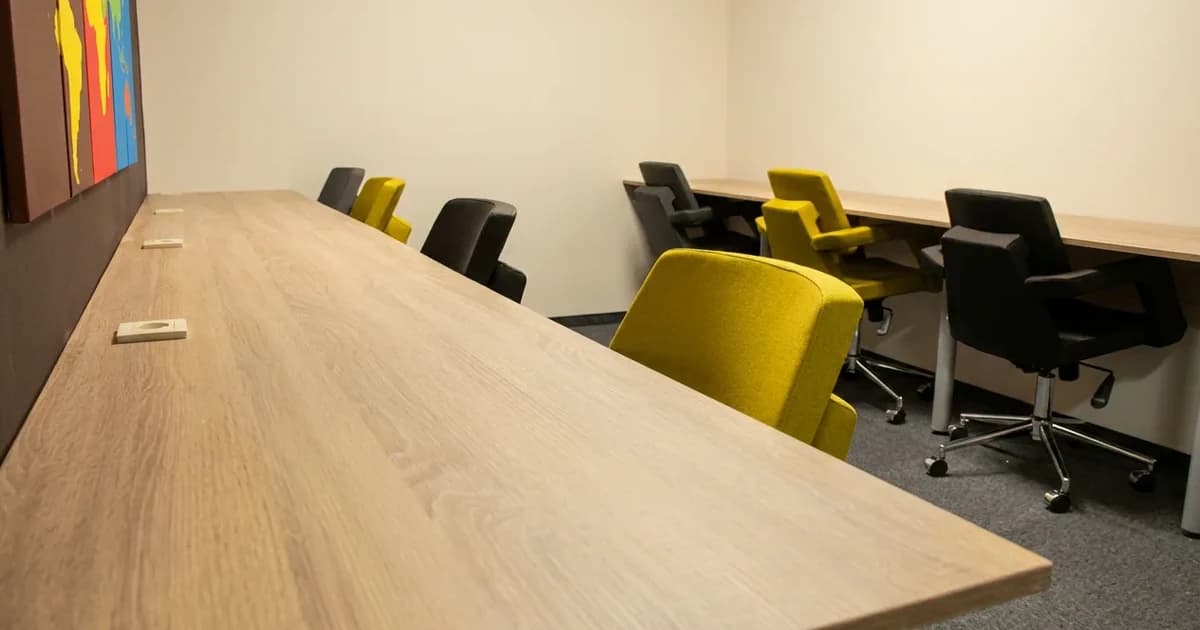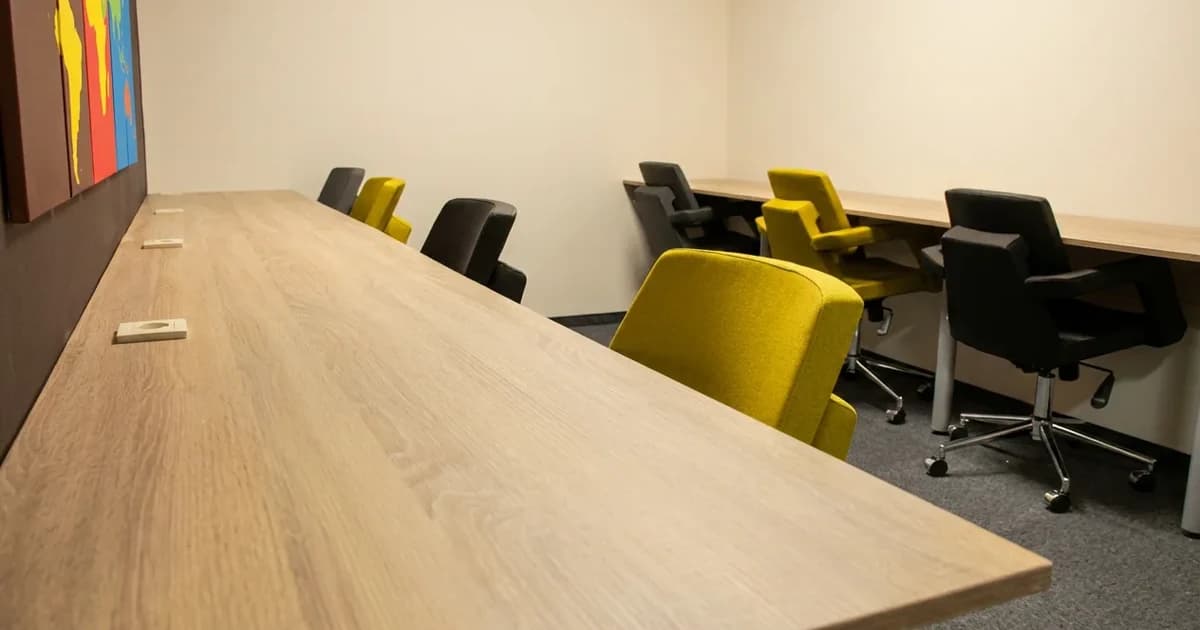
A shared office is a flexible work model in which several people or businesses use the same professional space with shared infrastructure, buying a desk or room only for as long as you need it; internet, electricity, cleaning, security, and a shared kitchen are all included in the service, so you sit down to work without taking on a long lease, furniture investment, or deposit. Accessible in Istanbul from an hourly open office desk, this model offers a professional work environment without the fixed cost of a traditional office to a wide audience, from freelancers to early-stage founders, remote workers to teams needing an extra desk. Drawing on the experience of the Micro Office team that has provided office infrastructure to more than 500 businesses from Esenler Tekstilkent Koza Plaza since 2008 across 18 years, this guide brings together what a shared office is, which types exist, who it suits, the real pricing logic, and how to choose one in Istanbul, all in one place.
If you want to understand the most flexible desk product inside the shared office, our hot desk guide is the right starting point, and for the community side of the model our coworking guide explains the umbrella concept. This article focuses on the shared office concept itself, its types, and the selection decision.
What Is a Shared Office?
A shared office is a flexible work model in which a workspace is used jointly by more than one person or business, and each user thinks only about their own desk or room and the time they use. Often called a "shared workspace" or "coworking space," this concept positions the office not as property but as a service you buy the moment you need it. All infrastructure (uninterrupted internet, electricity, cleaning, security, a shared kitchen, and often a meeting room quota) is provided by the operator; the user does not deal with a long-term lease, furniture investment, or subscription setup. In global terminology the shared office is the equivalent of the coworking umbrella, and it contains different intensity options inside it such as an open office desk, a shared room, a private room, and a dedicated desk. It is bought hourly, daily, or monthly; when your need for a desk ends, so does the cost you have to pay.
The core logic of the shared office is turning a fixed cost into a variable one. In a traditional office, rent, dues, furniture, an internet subscription, and bills continue as a fixed burden every month; in a shared office, you pay only for the hours or days you use. This structure aligns cost with real usage for professionals whose work tempo varies or who do not need a physical space every day. The flexibility of the shared office is twofold: you choose on both the time scale (hourly, daily, monthly) and the privacy scale (from an open desk to a closed private room). In this sense the shared office is not a single product but a family of services in which you pick a tier according to your need.
Shared Office Types
A shared office is not a single product; it splits into four core options by privacy and usage intensity. Knowing these types lets you match your budget and privacy need to the right tier:
- Open office desk: You work at a desk in a shared open area with other users around you. It is the most economical shared office entry point and is enough for focused, individual laptop work. Privacy is low and guests are not hosted.
- Shared room desk: You use a desk in a calmer, semi-enclosed room shared by a few people, a step more orderly than the open office. It forms the mid segment for those wanting a quieter setting.
- Private room: You use a room allocated to you with a door that closes, in two tiers (interior, windowless, and window). For work requiring privacy and guest reception, it is the top tier of the shared office.
- Dedicated desk: The same desk is reserved for you in an open or shared area; you can leave your equipment and sit in the same spot every day. It suits those coming 4-5 days a week regularly; at Micro Office this need is met by the routine office solution.
The main axis separating these four types is privacy and usage frequency. The open office desk is cheapest for occasional, individual use; the shared room asks for a bit more calm; the private room comes into play when privacy and guests are needed; the dedicated desk is the product for someone who wants to come to the same spot every day. Variable desk use on a first-come, first-served basis is the hot desk model, the most flexible edge of the shared office; our hot desk guide, which covers this product in detail, explains the day-to-day difference between the open office and the shared room.
Who Is a Shared Office For?
A shared office suits people who need a professional work environment but do not want to take on the fixed cost and long commitment of a traditional office. The usage profile where flexibility creates real value is someone who uses the space not every day, but on certain days of the week or certain hours of the month. Typical shared office users include:
- Freelancers and self-employed professionals: Those who want to escape distractions at home, work in a professional setting, and show clients a serious address.
- Remote and hybrid workers: People whose company is in another city or abroad, or who come to the office a few days a week; those whose work pattern makes a fixed office wasteful.
- Early-stage founders: One- or two-person teams with uncertain growth who prefer to start with a flexible arrangement rather than renting a corporate office and taking on risk.
- Visiting professionals: People coming to Istanbul briefly who need a desk between meetings to work on their laptop.
- Teams needing an extra desk: Businesses that need a desk for a temporary hire or project partner during a busy period but do not want to rent a new room for it.
A shared office is not right for every need. Because you work in an open or shared area, regular client reception and confidential work do not find the right ground at an open desk; if you need a client consultation, sensitive data work, or a closed-door meeting, move to the private room tier or turn to a locked, dedicated ready office solution. An hourly meeting room can also be added for consultations. The shared office delivers value where it is strongest: flexible, occasional, cost-conscious use.
Shared Office vs Ready Office vs Virtual Office
A shared office is often confused with a traditional rented office, a ready office, and a virtual office. The fundamental difference between them is the nature of the space, privacy, and cost structure. In a traditional rented office you set up an empty space yourself (rent plus dues plus furniture plus internet); in a shared office everything is ready and you pay as you use; in a ready office you get a closed, dedicated room; in a virtual office you use not a physical desk but only a legal address and mail service. The table below compares the four models side by side:
| Criterion | Shared Office | Ready Office | Virtual Office | Traditional Rented Office |
|---|---|---|---|---|
| Space | Open/shared, flexible desk or room | Closed, locked private room | No physical desk, address only | Empty, you set it up |
| Privacy | Low to medium (high in private room) | High | None (no space use) | High |
| Cost structure | Pay as you use, variable | Monthly fixed, all included | Lowest monthly, address only | Highest, multi-item fixed |
| Setup time | Zero (ready infrastructure) | Zero (ready infrastructure) | Same day | Weeks (fit-out, furniture) |
| Client reception | Limited (suitable in private room) | Suitable | With a meeting room | Suitable |
| Typical user | Freelancer, hybrid, small team | Full-time 1-10 person team | Business needing an address | Settled, larger team |
The decision logic is simple: answer how often you need a physical space and whether you need privacy. If you want flexible, occasional use, the shared office is the most economical choice. If you need a full-time, locked, dedicated room, the ready office is the right category. If only a legal address and mail are enough, a virtual office is the most suitable solution. If you want to compare the three flexible models (virtual office, ready office, coworking) from a monthly perspective, our virtual office, ready office, and coworking comparison covers the distinction in detail.
How Does Shared Office Pricing Work?
Shared office pricing works in three tiers (hourly, daily, and monthly), and its core logic is pay-as-you-use. The unit cost drops as usage rises: sitting all day on the hourly rate usually costs more than the daily package, so if you will work a full day the daily package wins, and if you will exceed 30 hours a month the monthly package is the better value. The second variable that sets the price is the type of space: a desk in an open office is cheaper than a desk in a shared room, and a shared room is cheaper than a closed private room. Spaces with windows and natural light sit one tier above interior spaces. So a shared office price is not a single figure but a range shaped by your choices of time and privacy; picking the right tier keeps you from overpaying.
Micro Office's shared office options at Esenler Tekstilkent Koza Plaza follow this tiered logic:
| Option | Use | Guests |
|---|---|---|
| Open office (desk) | Hourly | No |
| Shared room (desk) | Hourly and daily | No |
| Private room (interior) | Hourly and daily | Yes |
| Private room (window) | Hourly and daily | Yes |
As the table shows, a desk in the open office is the most economical entry point; the shared room forms the mid segment; and for those wanting privacy and guest reception, there are interior and window private rooms, with the window room one tier higher. Ask us on WhatsApp for current rates. No guests are hosted at open or shared desks; guest reception is possible with the private room options. For someone using one regular day a week, a dedicated desk (routine office) monthly package is also available.
VAT note: In the Istanbul market, prices are listed VAT-excluded by standard. Hourly figures you see in ads have the applicable VAT rate added (20 percent as of 2026); the actual payment moves up a tier. Confirm the VAT status in writing before signing a contract or proforma invoice; a transparent provider gives you that clarity upfront.
How to Choose a Shared Office in Istanbul
When choosing a shared office in Istanbul, you can frame the right decision with four questions: how often will you come, do you need privacy, is the location convenient for transport, and what is actually included in the price? Clarifying these four headings keeps you from both overpaying and facing surprises during use. The items to evaluate before choosing are:
- Usage frequency: The hourly rate is most economical for a few hours, the daily rate for a full day, and the monthly package for regular use exceeding 30 hours a month. Choose the tier by your real usage.
- Privacy need: An open office is enough for focused individual work; if you need a consultation, confidential work, or guests, choose the private room tier.
- Location and transport: Proximity to metro, motorway, and public transport is critical, especially for visiting or hybrid workers; a hard-to-reach space creates a time cost even if it is cheap.
- What is included in the price: Confirm that uninterrupted, backup internet, a shared kitchen, printer access, security, and cleaning are part of the package.
- VAT status: Ask in writing whether the listed price is VAT-inclusive or exclusive; see the real payment amount upfront.
Confirming these five headings in writing before reserving makes shared office use surprise-free. A transparent provider clearly shares price tiers, included services, and the VAT status, and does not push you toward a tier larger than your real need. You can find every format for single-day needs in our daily office rental guide.
Shared Office at Esenler Tekstilkent: Micro Office
Micro Office offers its shared office solution on the 1st floor of Esenler Tekstilkent Koza Plaza Block A with four options: a desk in the open office, a desk in a shared room, an interior private room, and a window private room. Under our parent company Turde Gayrimenkul Yatirimlari A.S., founded in 2008, we have provided office infrastructure to more than 500 businesses for 18 years; our shared office product is the flexible edge of that experience. From the open office desk to a window private room where guests can be hosted, every user pays only for the hours or days they use, with no long contract or furniture investment.
The Esenler Tekstilkent location fits the shared office's "easy access and economic cost" need perfectly. It is 2 minutes from the TEM motorway entrance and within walking distance of the Tekstilkent metro station; arriving with a laptop from anywhere in Istanbul and sitting down to work is both easy and affordable compared with the prestige segment. In a Class A Koza Plaza setting, based on market observation, you work at a markedly lower cost than equivalents in Maslak or Levent. The concrete advantages of the Micro Office shared office:
- Four tiers, one space: From an open office desk to a full day in a private room, four options that map precisely to your budget and privacy need. No long commitment.
- Class A plaza, economic price: In a professional building like Tekstilkent Koza Plaza, at a markedly lower cost than the Maslak/Levent prestige segment, based on market observation.
- Easy access: 2 minutes from TEM, Tekstilkent metro within walking distance; one of the most accessible points for visiting or hybrid workers.
- Ready infrastructure: Backup fiber Wi-Fi, shared kitchen, printer, plaza security, and daily cleaning included; you start working the moment you sit down.
- 18 years of experience and a real space: We have operated at the same address since 2008; this is a real workspace you can visit and see, not a virtual one.
For regular weekly use you can move to a dedicated desk (routine office), and for a full-time, locked space to a ready office solution. If you are unsure which tier suits you, share your usage profile; we will identify the right option together with a transparent price.
Frequently Asked Questions
What is a shared office?
A shared office is a flexible work model in which a workspace is used jointly by more than one person or business with shared infrastructure, and you buy the desk or room only for as long as you need it. Internet, electricity, cleaning, security, and a shared kitchen are all included; it requires no long lease, furniture investment, or deposit. It is often called a "shared workspace" or "coworking space" and is the equivalent of the coworking umbrella.
How much does a shared office cost?
Shared office pricing depends on the workspace you choose and how long you use it. The open office desk is the most economical option; the shared room, interior private room and window private room are each priced one tier higher. Prices are listed VAT-excluded; if you will work a full day, the daily package unit cost falls below the hourly rate. Ask us on WhatsApp for current rates.
What are the types of shared office?
A shared office splits into four core types: open office desk (most economical, shared open area), shared room desk (semi-enclosed room shared by a few people), private room (a closed room allocated to you, interior and window), and dedicated desk (the same desk reserved for regular use). The types differ by privacy and usage frequency; the open office suits occasional, individual use, while the private room suits work needing privacy and guest reception.
What is the difference between a shared office and a ready office?
In a shared office you use a flexible desk or room in an open or shared area and pay as you use; privacy is low at an open desk. In a ready office you get a closed, locked, dedicated room, pay a fixed monthly fee, and have a setting suitable for client reception. A shared office is more appropriate for flexible, occasional use, while a ready office is more appropriate for full-time use requiring privacy.
Can you host clients at a shared office?
No guests are hosted at open office and shared room desks; because the setting is shared and privacy is low, it is not suitable for client consultations. If you need guest reception, choose the private room options (interior or window) or add an hourly meeting room. For regular client reception, a locked, private ready office is the more appropriate solution.
Are a shared office and coworking the same thing?
Coworking is the general term in global literature for working in a shared space; the shared office is its everyday equivalent and, in practice, refers to the same model. Both cover products such as the open office desk, hot desk, dedicated desk, and private room. Those searching in Turkish usually say "shared office," while those preferring the global term say "coworking"; our coworking guide, which covers the distinction in detail, explains the community side of the model.
Do you need a contract or deposit for a shared office?
For hourly and daily use of a shared office, no long-term lease, furniture investment, or deposit is required; the reservation is made via an online form or phone and WhatsApp, payment is usually taken in advance, and use begins the moment the space is handed over. For regular monthly use, a simple service agreement is signed. Because activation time is zero, in most cases you can sit at a desk the same day.
Conclusion and Next Step
A shared office is a flexible model in which you use a space with shared infrastructure and buy a desk or room on a pay-as-you-use basis, offering a professional work environment without the fixed cost and long commitment of a traditional office. With four tiers ranging from the open office desk to the private room, it serves freelancers, remote and hybrid workers, new founders, and teams needing an extra desk. To make the right decision, answer four questions: how often will you come, do you need privacy, is the location convenient for transport, and what is actually included in the price? A shared office for flexible, occasional use, a routine office for regular weekly use, and a ready office for a full-time, locked space are the right categories. Clarifying the VAT status in writing prevents post-contract surprises.
At Micro Office, we have offered flexible work solutions at Esenler Tekstilkent Koza Plaza for 18 years. With four shared office options ranging from the open office desk to a window private room where guests can be hosted, we help you choose a desk that maps precisely to your usage profile; ask us on WhatsApp for current rates.
Next step for a shared office:
- Get in touch - phone or WhatsApp: 0543 347 27 99
- Review our hot desk and open office service page - four options, package contents, and visuals
- Read our hot desk guide - the most flexible desk product of the shared office